
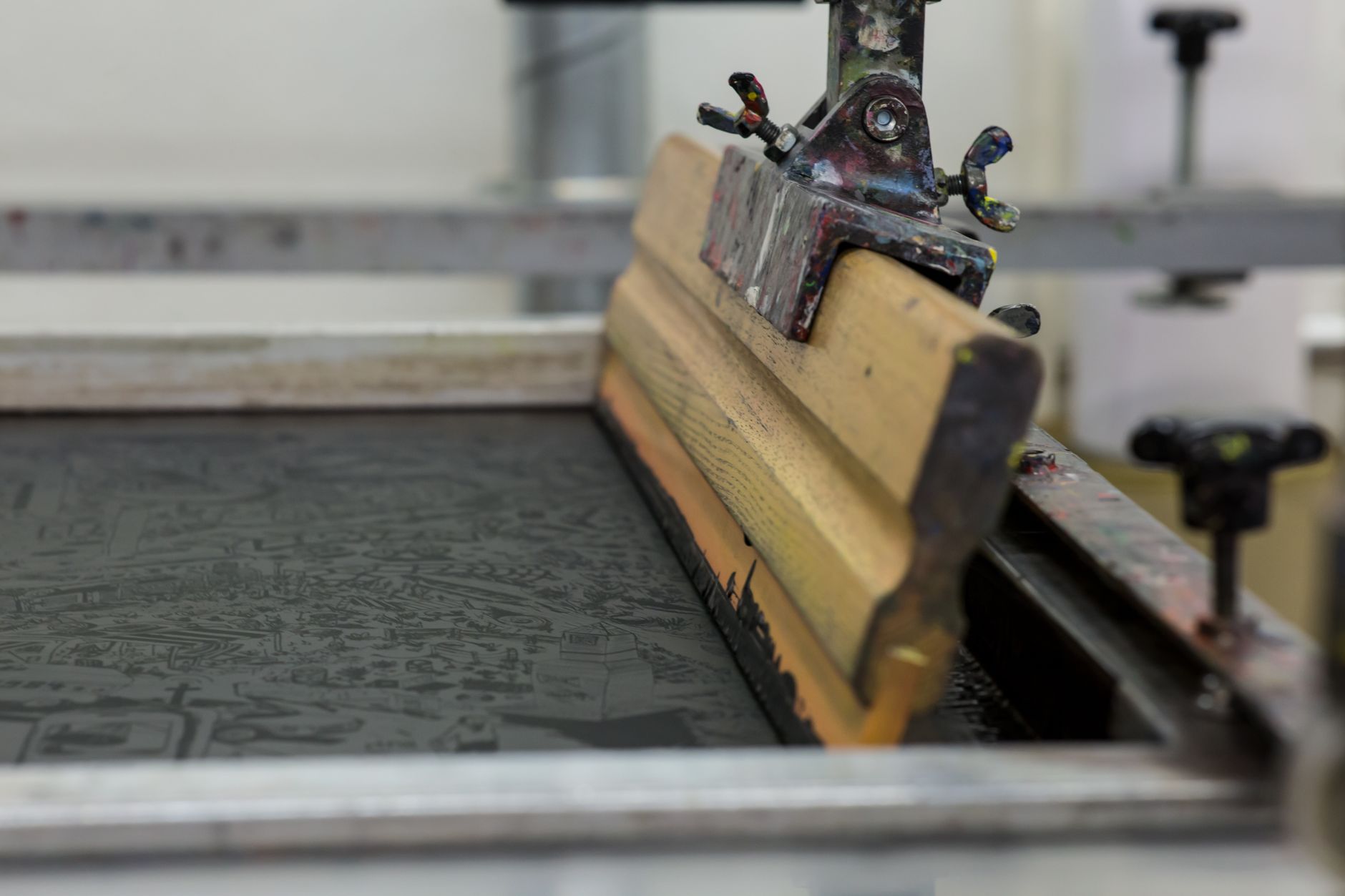
The conclusion first: choosing a print provider on base cost means choosing on the only one of six variables you can see from the outside. The other five — print method, fulfilment time, where they print, which garment blank they use and how they handle a misprint — are the ones your reviews will be about. Eliminate on print method first, then on print location, then on the misprint policy, and settle it with a test order you wash five times before deciding anything.
Below is what each of the six means in practice, and the arithmetic on where a cheap base cost does and does not cost you money.
What should you compare when choosing a print provider?
Six things decide what a provider costs you: the base cost, the postage, the fulfilment time, where they print, which garment blank they use, and how they handle a misprint. Base cost is the only one visible from the outside, which is why choosing on it is choosing on the least informative number.
Print method decides what your catalogue can be
The process determines which products you can sell and what your artwork is allowed to look like. It is the most consequential difference between providers and the one most often skipped.
| Method | Works on | Good for | Cannot do |
|---|---|---|---|
| Direct to garment | High-cotton knits | Full-colour illustration, photographic detail, soft hand, one-off designs with no colour limit | Polyester and high-blend fabrics, true neons, reliable results on very dark garments without a good pretreatment process |
| Direct to film | Cotton, blends, polyester, most woven fabrics | Opaque bright colour on any base, hoodies and blends, anything direct to garment struggles with | An entirely invisible hand — the print sits on the fabric rather than in it, and you can usually feel and sometimes see the film edge |
| Sublimation | White and light polyester, coated hard goods | All-over prints, permanent colour with no hand at all, mugs and hard surfaces | Cotton, dark garments, and white — there is no white ink, so white is whatever the substrate already is |
| Embroidery | Most woven and knit garments, caps | Left-chest marks, caps, a premium perceived value, durability that outlasts the garment | Gradients, fine detail, small text, anything with more than a handful of colours |
The practical consequence: a direct-to-garment-only provider cannot give you a polyester performance tee or an all-over print, and a sublimation shop cannot give you a cotton tee. A plan spanning fabric types needs a provider with more than one method, or more than one provider.
The method also decides what your artwork files have to be, since each holds a different amount of detail on the same design. If you have been exporting everything at one density out of habit, the 300 DPI myth is worth reading alongside this, because the right file for a sublimated mug is not the right file for a direct-to-garment tee.
Embroidery deserves its own warning. It is priced by stitch count, needs your artwork digitised first, and cannot render gradients or thin lines. A logo that looks fine at 4 inches printed can be unreadable at 4 inches stitched.
Base cost is one number in a list of six
The six that decide what a provider costs you are the base cost, the postage, the fulfilment time, the print location, the garment brand, and the reprint policy. Sellers compare the first and inherit the other five.
Take two plausible providers. One charges $10.50 for a printed tee with $4.99 postage. The other charges $12.75 with $4.25 postage. Per order that is $15.49 against $17.00, so the first is $1.51 cheaper. At 200 orders a month, choosing it saves $302.
That is the comparison most sellers stop at. To carry it through to what you actually keep, compare two providers on print-on-demand profit at the price you intend to charge, rather than on the catalogue page.
Now suppose the cheaper one has a fault rate of 4% and the more expensive one 2%. On 200 orders that is eight failures against four. If half of each are reprinted at your cost and half refunded outright on a $28.99 shirt, the cheaper provider costs you about $178 in damage and the dearer one about $92. The gap is $86, which the $302 saving comfortably covers.
So on the visible numbers, the cheap provider wins. It is worth being straight about that rather than pretending otherwise.
The cost that flips it is the one nobody can put a figure on. Eight bad orders a month is a steady trickle of three-star reviews, and your review average feeds the ranking that produces the traffic that produces the 200 orders. Nobody can tell you what that costs in dollars. What can be said is that it applies to every future order rather than only the eight that went wrong, and that recovering a damaged average takes months of clean fulfilment.
Run the visible half properly before you argue about the invisible half. Whether a base cost works at all depends on the price it has to support, and what print-on-demand costs per shirt once fees and returns are in the picture is a different number from the one on the catalogue page.
Where they print decides delivery, not just postage
A shirt printed in the same country as its buyer typically arrives inside a week. Printed on another continent it takes considerably longer, may sit at a customs border, and can arrive with a charge the customer did not expect and blames you for.
So if most of your buyers are in one country, your provider needs a facility there or a routing arrangement that puts one in the path. A global network with nothing near your customers is a slow provider with good marketing.
A subtler version of the same problem: a two-item order split across two facilities arrives as two parcels on different days, and the customer experiences the later one as a late delivery for the whole order. Ask how multi-item orders are routed.
Fulfilment time is the number to interrogate hardest, because providers quote an average and you live with the tail. A stated two to five business days means some orders take five, and five plus transit plus a weekend is a fortnight from the customer's point of view. Ask what the ninetieth percentile looks like, and what happens in the fourth quarter when volume triples.
Garment brands, and fit differences that are real
The blank matters more than sellers expect, because your customer ordered a size and has an opinion about what it should feel like. The common tees are genuinely different garments. A Gildan 5000 is a heavier, boxier, fuller-cut 100% cotton shirt at around 5.3 oz. A Bella+Canvas 3001 is a lighter retail fit, around 4.2 oz, cut closer to the body and generally sized smaller in practice. A Comfort Colors 1717 is a heavyweight garment-dyed shirt at around 6.1 oz with a relaxed cut and a softer, faded colour palette. Fabric specifications change from season to season, so treat those figures as the right order of magnitude and check the current spec sheet before you publish a size chart.
Two rules follow. Publish the size chart for the blank you are actually selling, from that manufacturer, not a generic one you found. And if you change blanks, update every listing that uses it. A repeat customer orders the size that worked last time, and a silent switch from a 5.3 oz relaxed cut to a 4.2 oz fitted one produces a return and a review that mentions it.
Colour consistency between reprints
The same file, printed on two different days, on two different machines, onto garments from two different dye lots, does not come out identical. This is normal and true of every provider. What differs is how much drift they tolerate and whether they measure it.
It matters in three situations: a customer orders the same design twice months apart and notices, a customer orders a matching set that does not match, or your photography was shot from an April print and the October shirt is visibly not that colour.
Ask whether they profile machines individually, how often they recalibrate, and whether they treat a colour complaint as a defect. The answers vary widely, and a provider that has thought about it will tell you plainly.
How they handle a misprint
Every provider has a policy page. What you want to know is narrower than what the page says.
Ask what evidence they need, since "a clear photograph" and "the item returned at your cost" are very different answers. Ask the claim window, and whether it runs from dispatch or delivery — a customer who opens a parcel a fortnight late can put you outside a short window through nobody's fault. Ask what happens when a parcel is lost in transit rather than misprinted, which is the commonest failure and the one policies are vaguest about. And ask where the line sits between a defect and "not as expected", because that is where most disputes live.
A provider who answers those four questions specifically is worth more than one who is a dollar cheaper and answers them with a link.
The test order, which settles most of this
All of the above is research. The test order is evidence, and it costs about the price of three shirts. Order your own product in three sizes — a small, a large and a 2XL — and pay full postage like a customer. Then do the thing most sellers skip: wash them five times at the temperature your customers will actually use, and tumble dry them, because that is where print quality reveals itself.
What you are looking for: cracking or fading at the folds, a white underbase showing as a halo at the edges of the artwork, whether the neck holds its shape, whether the colour matches what you approved on screen, whether the three sizes agree with each other and with the published chart, whether the packaging carries the provider's branding into your customer's hands, and how long it took door to door against the quoted time.
Fifty dollars and two weeks, set against a catalogue you are about to build on this decision. It is the cheapest research in this business, and it separates sellers who have chosen a provider from sellers who have merely signed up to one.
A working order for the decision
- Decide what you intend to sell, then eliminate every provider whose print method cannot make it.
- Among the survivors, check where they print relative to where your buyers are.
- Read the misprint and lost-parcel policy properly, and ask the four questions above.
- Put the base cost, postage and your own returns rate into a calculation rather than comparing catalogue prices.
- Place a test order with the top two, in three sizes.
- Wash everything five times before you decide anything.
What to do next
Before you place the test orders, put your two shortlisted providers through two calculations so you are comparing outcomes rather than catalogue prices.
Put each provider's base cost, their postage and your own measured returns rate into the print-on-demand profit calculator, one at a time, at the price you intend to charge. That converts three separate numbers into the one number that matters, which is what you keep per order from each provider.
Then run the same selling price through the Etsy fee calculator so the marketplace's cut sits in the same picture. A base cost gap of a dollar looks decisive on a catalogue page and often turns out to be smaller than the fee difference between charging for delivery and building it into the price.
The cheapest base cost is often the most expensive decision, but not for the reason usually given. It is not that cheap providers are always worse. It is that base cost is the only one of the six variables visible from outside, so choosing on it means learning the other five from your reviews.
Choosing a print provider FAQ
What is the difference between DTG and DTF printing?
Direct to garment sprays ink into the fibres of a high-cotton knit, giving a soft hand and photographic detail but struggling with polyester and blends. Direct to film transfers a printed film onto the fabric, so it puts opaque bright colour on almost any base including polyester and hoodies — at the cost of a print that sits on the fabric, where you can usually feel and sometimes see the film edge.
Gildan 5000 or Bella+Canvas 3001 — which should I sell?
They are different garments, not better and worse. The Gildan 5000 is heavier and boxier, around 5.3 oz of 100% cotton with a fuller cut. The Bella+Canvas 3001 is a lighter retail fit at around 4.2 oz, cut closer to the body and generally sizing smaller in practice. Pick one, publish that manufacturer's own size chart, and never switch blanks silently on a live listing.
Is the cheapest print provider actually cheaper?
On the visible numbers, often yes — a $1.51 gap per order is $302 a month at 200 orders, which covers a good deal of extra reprinting. What flips it is the part with no dollar figure: a higher fault rate is a steady trickle of three-star reviews, and your review average feeds the ranking that produces the orders in the first place. That cost applies to every future order, not only the ones that went wrong.
How do I test a print provider before committing?
Order your own product in three sizes — small, large and 2XL — paying full postage like a customer, then wash all three five times at the temperature your buyers will use and tumble dry them. Check for cracking at the folds, a white underbase haloing the artwork, neck shape, colour against what you approved, agreement between the sizes and the published chart, and the provider's branding on the packaging.
How long does print-on-demand delivery take?
Inside a week when the garment is printed in the buyer's own country, and considerably longer across a border, where it may also sit at customs and arrive with an unexpected charge the customer blames on you. Interrogate the tail rather than the average: a quoted two to five business days plus transit plus a weekend reads as a fortnight to the person waiting.